

Bangladesh–Brazil Business Matchmaking
Md. Joynal Abdin
Founder & Chief Executive Officer, Trade & Investment Bangladesh (T&IB)
Editor, T&IB Business Directory; Executive Director, Online Training Academy (OTA)
Secretary General, Brazil Bangladesh Chamber of Commerce & Industry (BBCCI)
Bangladesh and Brazil represent one of the more promising yet still underdeveloped bilateral business corridors in the Global South. Bangladesh is now a lower-middle-income economy with a 2024 GDP of about US$450.12 billion, a population of roughly 174 million, and internet use at about 45% of the population in 2023. Brazil, meanwhile, remains Latin America’s largest economy, with a 2024 GDP of about US$2.19 trillion, a population of around 212 million, and internet use at about 84% in 2024. These figures matter because they show two large and increasingly connected markets with complementary business strengths: Bangladesh with its globally competitive manufacturing base, and Brazil with its scale in agriculture, raw materials, food processing, energy, and a vast consumer market.
The commercial relationship is already substantial, but it is still far from reaching its full potential. Official Bangladesh Bureau of Statistics data for FY2023–24 show that Bangladesh exported goods worth Tk 21.96 billion to Brazil and imported Tk 412.43 billion from Brazil, confirming both the scale of the relationship and the asymmetry that still exists in bilateral trade. Product-level 2024 trade data further show the complementarity of the corridor: Brazil’s main exports to Bangladesh included raw sugar, raw cotton, and soybeans, while Bangladesh’s leading exports to Brazil included men’s suits, knit sweaters, and men’s shirts. This is exactly the kind of trade structure in which business matchmaking can create practical gains by helping firms identify credible buyers, suppliers, distributors, sourcing partners, and investors on both sides.
For exporters and importers in both countries, the real challenge is rarely the absence of opportunity. The challenge is finding the right counterpart, at the right time, with the right commercial fit, and then building enough trust to move from introduction to transaction. That is where structured business matchmaking becomes highly valuable.
Defining Business Matchmaking
Business matchmaking is a structured process through which companies are introduced to carefully selected potential business counterparts based on commercial objectives, sector alignment, product compatibility, market interest, investment appetite, and long-term strategic potential. In international trade, it goes far beyond a casual introduction. It is a deliberate, research-based, and relationship-oriented service designed to connect exporters with importers, manufacturers with distributors, buyers with suppliers, technology providers with local partners, and investors with viable projects.
In the Bangladesh–Brazil context, business matchmaking means identifying where interests genuinely intersect. A Bangladeshi apparel exporter may need a Brazilian importer or retail channel partner. A Brazilian agribusiness company may need a reliable Bangladeshi processor, buyer, or representative. A logistics provider may seek partners handling customs, warehousing, and inland distribution. A pharmaceutical company may need regulatory guidance and a market entry collaborator. Matchmaking helps turn these possibilities into real conversations.
High-quality matchmaking usually includes several stages: profiling the client’s business objectives, identifying relevant target sectors, preparing a list of prospective counterparts, screening those prospects for seriousness and fit, arranging meetings, supporting communications, and often assisting with follow-up. In other words, business matchmaking is not merely about introducing two companies. It is about creating a commercially meaningful bridge between them.
Importance and Benefits of Business Matchmaking
-
It reduces market entry uncertainty
Entering a foreign market is difficult because a company often lacks local knowledge, trusted contacts, and sector-specific intelligence. Business matchmaking reduces that uncertainty by connecting firms with vetted counterparts that are more likely to fit their goals. For Bangladeshi companies looking toward Brazil, and Brazilian companies looking toward Bangladesh, this shortens the path from curiosity to commercially relevant engagement.
-
It saves time and search costs
Many firms waste months contacting random companies, sending unsolicited profiles, or attending general events that yield little business value. Matchmaking narrows the search. Instead of approaching the market blindly, a company can focus on a smaller number of qualified prospects. This is especially important in cross-border business where language, regulation, time zones, and cultural distance can slow progress.
-
It improves the quality of business relationships
A good business relationship begins with relevance. When both parties are introduced because their product range, sourcing need, distribution interest, pricing logic, or investment goal already align, the probability of a productive discussion increases. Matchmaking helps move beyond superficial networking and toward relationships that can result in supply agreements, agency appointments, distributorships, sourcing arrangements, joint ventures, or strategic alliances.
-
It helps uncover sectoral complementarity
The Bangladesh–Brazil trade corridor is commercially interesting precisely because the two economies are not identical. Brazil is strong in agricultural commodities, cotton, food inputs, and industrial raw materials, while Bangladesh is strong in labor-intensive manufacturing, especially apparel and several light manufacturing lines. Matchmaking allows these complementarities to be translated into targeted business opportunities rather than remaining abstract trade statistics.
-
It supports trust-building in international trade
Cross-border trade depends heavily on trust. Buyers want assurance on quality, consistency, compliance, and delivery. Sellers want confidence in the seriousness and credibility of the buyer. Matchmaking institutions and chambers can help create a more trusted environment by introducing parties through a recognized platform, which often improves response rates and reduces perceived risk.
-
It creates opportunities for SMEs
Large corporations often have their own international business development networks. Small and medium-sized enterprises usually do not. For SMEs in Bangladesh and Brazil, matchmaking is particularly important because it gives them institutional support, market access, and visibility that they might otherwise struggle to achieve on their own.
-
It supports trade diversification
Bangladesh has a strong export base but remains concentrated in a few traditional markets and sectors. Brazil, too, can benefit from broader and deeper commercial links with fast-growing Asian partners. Business matchmaking helps both sides diversify customers, suppliers, and markets. This makes firms more resilient and less dependent on a narrow set of trade relationships.
-
It can accelerate investment and joint ventures
Business matchmaking is not limited to import-export transactions. It can also support licensing, technology transfer, co-manufacturing, packaging collaborations, warehousing arrangements, representative offices, and direct investment partnerships. In this sense, matchmaking is a broader economic cooperation tool, not just a sales support function.
-
It improves event outcomes
Trade fairs, expos, roadshows, and delegations often produce better results when meetings are arranged in advance. Matchmaking allows events to become transaction-oriented rather than merely ceremonial. A well-structured chamber or trade mission can therefore generate more serious leads, deeper discussions, and stronger post-event momentum.
-
It strengthens bilateral institutional ties
When business matchmaking is conducted through a bilateral chamber, the process also contributes to broader institutional cooperation. It brings companies, trade bodies, policymakers, and service providers into closer conversation. Over time, this can help address market barriers, improve policy dialogue, and deepen bilateral economic relations.
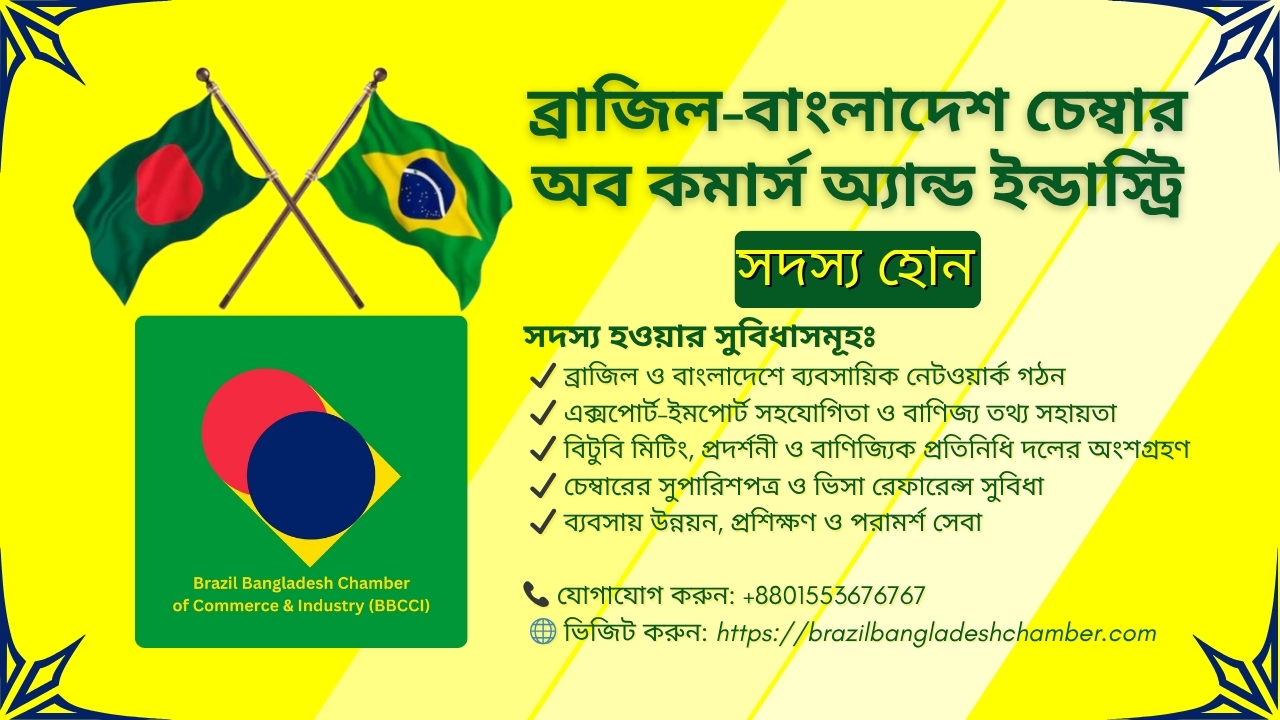
Business Matchmaking Services of Brazil Bangladesh Chamber of Commerce & Industry (BBCCI)
The Brazil Bangladesh Chamber of Commerce & Industry (BBCCI) presents itself as a bilateral business platform dedicated to facilitating trade, investment, and collaboration between Brazil and Bangladesh. On its official website, BBCCI states that its mission is to enhance bilateral economic relations through networking, advocacy, knowledge exchange, and support for business growth in both countries.
Within that broader mission, business matchmaking is one of BBCCI’s core service offerings.
-
Direct business matchmaking
BBCCI explicitly lists Business Matchmaking among its key services. The chamber states that it facilitates connections between Brazilian and Bangladeshi businesses through networking events, trade missions, and matchmaking sessions, helping companies identify potential partners, suppliers, distributors, and customers. This is central to the chamber’s value proposition because it directly addresses the most practical need in bilateral trade: finding the right business counterpart.
-
Networking events and commercial introductions
BBCCI’s service framework includes the organization of networking opportunities that bring together business leaders, policymakers, diplomats, and sector stakeholders. These settings are useful because many cross-border deals begin not with a contract, but with a conversation. Structured introductions in a chamber environment can create the first layer of confidence needed for commercial engagement.
-
Trade missions and business delegations
The chamber identifies trade missions and business delegations as part of its approach to promoting bilateral commerce. These are particularly important for Bangladesh–Brazil business development, because physical market exposure often helps companies understand pricing, consumer preferences, distribution structures, and operational realities more effectively than desk research alone. Trade missions also make matchmaking more productive by combining meetings with market visits and institutional engagement.
-
Market intelligence support
BBCCI states that it provides market research and intelligence on sectors in Brazil and Bangladesh, including market trends, consumer behavior, regulatory frameworks, and investment opportunities. This matters because business matchmaking is strongest when introductions are informed by research. Without market intelligence, meetings may be polite but commercially weak. With intelligence, meetings can be targeted, data-backed, and more likely to lead to action.
-
Trade promotion through fairs and campaigns
The chamber also promotes bilateral trade through fairs, exhibitions, and promotional initiatives. These activities give members and participating firms a platform to showcase products and services to new audiences. In practice, trade promotion and matchmaking reinforce one another: promotion builds visibility, while matchmaking converts visibility into direct business conversations.
-
Investment facilitation
BBCCI states that it assists companies interested in investing in Brazil or Bangladesh by providing information on investment policies, incentives, regulations, and procedures, while also helping identify projects and local partners. This means the chamber’s matchmaking role is not confined to trading goods. It also extends to investment-oriented relationship building.
-
Advisory services for market entry
The chamber lists advisory support on market entry strategy, business planning, risk management, regulatory compliance, and cultural understanding. This is important because an introduction alone is not enough. A potential buyer-seller meeting may fail if one side misunderstands import procedures, certification issues, pricing structures, or negotiation norms. Advisory support increases the practical value of matchmaking.
-
Training and capacity building
BBCCI also highlights training programs, seminars, and workshops on international trade practices, export-import procedures, supply chain management, digital marketing, and cross-cultural communication. These services help prepare companies to use matchmaking opportunities more effectively. The better prepared a company is, the more likely it can convert a lead into a real transaction.
Why You Should Be a Member of BBCCI?
For exporters and importers in Bangladesh and Brazil, BBCCI membership can be strategically valuable because it is designed not merely as a label, but as a business access mechanism.
-
Access to a bilateral network
BBCCI membership offers access to a network of businesses, diplomats, officials, and industry stakeholders from both countries. In international business, access matters. A member is generally better positioned to be seen, introduced, and considered than a completely unknown outsider.
-
Better matchmaking opportunities
The chamber specifically states that members gain opportunities for business matchmaking, partnership development, and collaboration. For many firms, this alone can justify membership because it increases the chance of reaching serious leads rather than chasing cold prospects.
-
Access to market information
Members are offered access to market intelligence, trade statistics, business directories, and updates on policy and regulatory developments. This can significantly improve strategic decision-making for companies that are exploring sourcing, exporting, representation, or investment opportunities.
-
Representation and advocacy
BBCCI states that it represents members’ interests in dialogue with government agencies, regulators, and policymakers, and that members can participate in advocacy efforts related to trade barriers and business environment issues. This institutional voice can matter for firms that need support beyond purely commercial introductions.
-
Event access and promotional visibility
The chamber notes that members receive priority invitations and discounted participation for seminars, workshops, trade fairs, forums, and networking receptions. It also offers brand exposure through its website, promotional materials, social media, and press releases. For companies seeking visibility in a bilateral corridor, these are meaningful practical benefits.
-
Advisory and compliance support
BBCCI states that members can access advisory services, trade inquiry facilitation, market entry support, and assistance with documentation, certifications, and compliance requirements. For newer exporters and importers especially, these services can reduce friction and improve readiness for cross-border transactions.

Membership structure suited to different stakeholders
The chamber offers Corporate Membership, Individual Membership, and Associate Membership, which suggests that businesses, professionals, consultants, associations, and partner organizations can all participate in ways that match their profile and objectives.
Contact Details of BBCCI
According to BBCCI’s official contact page, the chamber’s contact details are:
Brazil Bangladesh Chamber of Commerce & Industry (BBCCI)
Shanta Skymark, Levels 8th–13th
18 Gulshan Avenue, Gulshan
Dhaka-1212, Bangladesh
Email Contacts
President: president@brazilbangladeshchamber.com
Vice President: vp@brazilbangladeshchamber.com
Secretary General: sg@brazilbangladeshchamber.com
Whats-App: +8801553676767
Website: brazilbangladeshchamber.com
Closing Remarks
Bangladesh–Brazil business matchmaking is no longer a peripheral concept. It is becoming a practical necessity for firms that want to participate seriously in this bilateral corridor. The economic logic is strong: Bangladesh offers manufacturing dynamism, export competitiveness, and an expanding entrepreneurial base, while Brazil offers scale, commodity strength, industrial depth, and a major Latin American gateway. The trade relationship already shows meaningful volume and clear product complementarity, but stronger institutionalized matchmaking can help move it from transactional imbalance toward broader, deeper, and more diversified commercial engagement.
For exporters and importers, the real opportunity lies in finding the right counterpart, building trust, and converting intent into business. That is why chambers such as BBCCI matter. A well-functioning bilateral chamber does not simply organize events; it helps create commercial bridges, market knowledge, and institutional confidence. For Bangladeshi and Brazilian businesses that want to identify partners, expand sourcing networks, develop distributorships, enter new sectors, or build long-term strategic ties, Bangladesh–Brazil business matchmaking deserves to be approached as a serious growth instrument rather than a ceremonial networking exercise.