

Business Matchmaking for Brazilian Businesses in Bangladesh
Md. Joynal Abdin
Founder & Chief Executive Officer, Trade & Investment Bangladesh (T&IB)
Editor, T&IB Business Directory; Executive Director, Online Training Academy (OTA)
Secretary General, Brazil Bangladesh Chamber of Commerce & Industry (BBCCI)
Bangladesh and Brazil are no longer “distant markets” to each other in practical business terms; they are increasingly complementary economies with clear, bankable trade logic. Brazil is a global powerhouse in agro-commodities and industrial inputs, while Bangladesh is a fast-growing manufacturing and consumer market with deep capabilities in textiles, apparel, leather goods, light engineering, and export-oriented services. Recent reporting illustrates that Bangladesh’s exports to Brazil reached about US$187 million in FY2024–25, up around 26% from FY2023–24, reflecting momentum in commercially traded products and growing buyer acceptance. At the same time, Brazil has strengthened its position as a strategic supplier of essential inputs for Bangladesh’s manufacturing engine especially cotton for the apparel value chain underscoring the scale and seriousness of bilateral commercial dependence.
In this context, “business matchmaking” becomes more than an event activity; it becomes an execution discipline. It is the structured process of identifying, qualifying, connecting, and supporting partners buyers, suppliers, distributors, agents, joint-venture counterparts, service providers, and investors so that real transactions can happen with lower risk, faster timelines, and better outcomes.
What Business Matchmaking Really Means in Trade
Business matchmaking is a managed pathway from opportunity to contract. It begins with understanding what a company truly needs price range, volume, specifications, packaging, compliance requirements, delivery terms, target customers, and payment preference. It then narrows a long list of “possible contacts” into a short list of “commercially fit counterparts,” based on verifiable capacity and credibility. Finally, it orchestrates structured engagement curated introductions, meeting agendas, product and company documentation, negotiation support, and follow-through until the relationship is either converted into business or responsibly discontinued.
For Brazilian exporters and importers, matchmaking in Bangladesh is most valuable when it reduces three common friction points: information gaps (who is reliable), process uncertainty (how business is done), and execution risk (quality, delivery, payment, compliance). For Bangladeshi exporters and importers, matchmaking creates access to Brazilian supply strength, stable sourcing, and new customer channels especially when buyer expectations and documentation are handled professionally.
Commercial Benefits of Business Matchmaking
The first benefit is speed-to-market. Instead of months of cold outreach, companies enter conversations with pre-qualified counterparts and realistic commercial expectations. The second benefit is cost control. Matchmaking reduces trial-and-error travel, sampling waste, and repeated negotiation cycles with unsuitable partners. The third benefit is risk reduction. When partner verification, capability checks, and compliance alignment happen early, the likelihood of shipment disputes, rejected goods, delayed payments, or reputational damage drops sharply.
Matchmaking also improves negotiating power. When a buyer meets multiple credible suppliers (or a supplier meets multiple serious buyers) in a structured process, pricing and terms become more transparent and competitive, yet still sustainable. Finally, matchmaking supports scalability. Once a reliable channel is established such as a distributor arrangement, sourcing partnership, or long-term supply contract companies can expand product lines, increase volumes, or invest locally with greater confidence.
Why Bangladesh Is a High-Logic Matchmaking Destination for Brazil
Bangladesh offers a rare combination for Brazilian businesses: a large domestic market, a dense manufacturing ecosystem, and a strong base of importers who regularly buy bulk commodities and industrial raw materials. The Bangladesh textile and apparel sector, for example, is a sustained driver of industrial demand for cotton and related inputs, and recent reporting highlights Brazil’s growing role as a top cotton supplier to Bangladesh’s import basket.
Meanwhile, Bangladesh’s export capability especially in readymade garments and related manufacturing creates a two-way partnership story. BBCCI’s own trade-focused analysis notes that two-way trade has been rising and that Bangladeshi shipments to Brazil climbed from about US$147 million to about US$187 million between FY2023–24 and FY2024–25. This combination Brazil as a strong supplier into Bangladesh and Bangladesh as an expanding exporter into Brazil creates a natural environment for structured business introductions, long-term contracts, and value-chain partnerships.
Introducing the Brazil Bangladesh Chamber of Commerce & Industry (BBCCI)
The Brazil Bangladesh Chamber of Commerce & Industry (BBCCI) positions itself as a bilateral bridge between the business communities of Brazil and Bangladesh, with a mission to facilitate trade and investment through networking, advocacy, and knowledge exchange. In its stated objectives, BBCCI emphasizes trade and investment promotion, information and market knowledge, capacity building, and networking collaboration exactly the elements that make matchmaking effective beyond ceremonial meetings.
BBCCI’s organizational focus also explicitly includes facilitating business matchmaking through its trade and investment activities. This matters for companies because a chamber-led matchmaking process can combine market access knowledge, stakeholder networks, and practical coordination to convert introductions into outcomes.
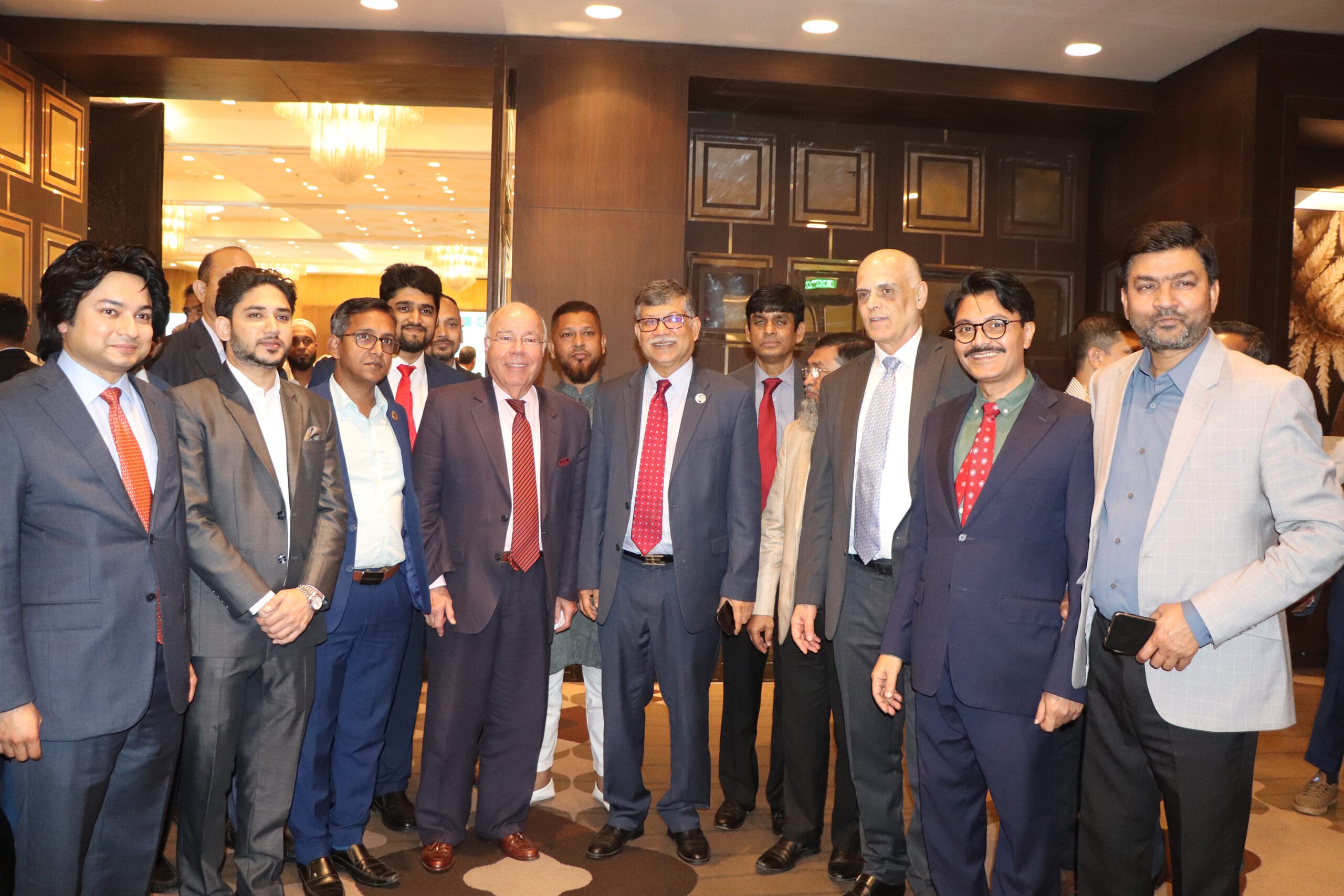
BBCCI’s Business Matchmaking Services for Brazilian Businesses
BBCCI publicly describes “Business Matchmaking” as a core service and explains that it facilitates connections between Brazilian and Bangladeshi businesses through networking events, trade missions, and dedicated matchmaking sessions helping companies identify potential partners such as suppliers, distributors, and customers. Beyond introductions, BBCCI also frames supporting services that strengthen matchmaking outcomes, including market intelligence, trade promotion through fairs and exhibitions, investment facilitation support, business advisory, and training/capacity building relevant to cross-border trade.
In practical terms, effective matchmaking for Brazilian businesses in Bangladesh typically includes several integrated layers. It begins with opportunity mapping identifying which Bangladeshi sectors and buyer categories align with the Brazilian company’s product, pricing, and volume. It continues with counterpart shortlisting identifying importers, distributors, manufacturers, or institutional buyers with demonstrated purchasing history or sector relevance. It then moves to meeting design setting agendas, ensuring the right decision-makers attend, and aligning expectations on documentation, samples, incoterms, and payment mechanisms. Finally, it demands disciplined follow-up turning meetings into trial orders, contracts, recurring shipments, or investment structures.
Matchmaking Models That Work Best for Brazil–Bangladesh Trade
One effective model is importer exporter channel building. Brazilian exporters of agro-commodities, cotton, or industrial inputs often succeed fastest by establishing one or more reliable importing partners in Bangladesh who can handle customs clearance, inland logistics, customer distribution, and local financing cycles. Another model is manufacturer-to-manufacturer integration. In this model, Brazilian suppliers become part of Bangladeshi manufacturers’ long-term sourcing plans, supported by agreed specifications, shipment schedules, and quality assurance protocols.
A third model is distribution and representation. Brazilian brands entering Bangladesh whether in food products, consumer goods, or specialized industrial items often require a local distributor or agent network that can manage compliance, retail or institutional relationships, and after-sales support where relevant. A fourth model is joint venture and project-based partnership. This can apply when Brazilian and Bangladeshi firms see value in local processing, packaging, warehousing, or co-investment structures that improve margins and create durable market presence.
What Makes a Matchmaking Engagement Successful?
Successful matchmaking is built on clarity and evidence. The Brazilian company must present a precise commercial profile: product specification sheets, certifications, capacity ranges, indicative pricing, lead times, and preferred terms. The Bangladeshi counterpart must demonstrate import capability or production capacity, relevant licenses, financial readiness, and operational systems. When both sides enter discussions with realistic assumptions about pricing, quality tolerance, documentation, and timelines conversion rates increase sharply.
Cultural and communication alignment is also decisive. Brazilian businesses often value relationship-building and long-term partnership signals; Bangladeshi businesses similarly value trust, responsiveness, and practical problem-solving. A chamber-facilitated format helps both sides navigate differences in negotiation style and accelerate trust through structure, transparency, and shared accountability.
Due Diligence, Compliance, and Risk Management in Bangladesh
For Brazilian exporters, Bangladesh requires attention to buyer verification, product compliance, and payment security. Partner due diligence should include company registration validity, import licensing where relevant, banking references, and past trade behavior. On product compliance, the requirements vary by sector food items, for instance, can involve labeling and standards expectations, while industrial inputs may require specific test reports and technical specifications. On payment, prudent structures include confirmed letters of credit, appropriate advance/partial advance models with trusted buyers, or secure documentary collections depending on the relationship maturity.
For Bangladeshi exporters targeting Brazilian buyers, it is equally important to align with Brazilian market expectations, including labeling, technical standards where applicable, and logistics planning to Brazilian ports and inland distribution. Matchmaking is not only about “finding a buyer,” but about ensuring the first shipment succeeds because the first shipment often determines whether a relationship becomes a long-term channel.
Priority Opportunity Areas for Matchmaking
Matchmaking demand tends to concentrate where trade logic is strongest. Brazil’s strengths in sugar, cotton, cereals, oilseeds, and related commodities align with Bangladesh’s large-scale import needs, and trade datasets commonly show these categories as major lines in Brazil’s export basket to Bangladesh in recent years. On the Bangladesh-to-Brazil side, the upward export trend reported by EPB-based coverage suggests continued room for Bangladeshi producers to deepen penetration in apparel, textiles, and other competitive manufactured goods.
Just as importantly, matchmaking is valuable in “second-order opportunities” where partnerships create additional value, such as bonded warehousing arrangements, quality testing and inspection services, packaging partnerships, and supply chain finance collaborations especially for repeat, high-volume trade.
Closing Remarks
Bangladesh is a market where relationships matter, but structure wins. For Brazilian exporters and importers, business matchmaking is the professional shortcut that converts market curiosity into verified partners, negotiated terms, and repeatable trade flows. The role of a bilateral platform such as the Brazil Bangladesh Chamber of Commerce & Industry is to make that conversion more predictable by combining networks, market intelligence, and organized engagement formats where introductions are matched with preparation and follow-through. When matchmaking is approached as a disciplined process rather than a one-time meeting Brazilian and Bangladeshi businesses can build durable corridors of supply, sourcing, distribution, and co-investment that serve both markets for years to come.